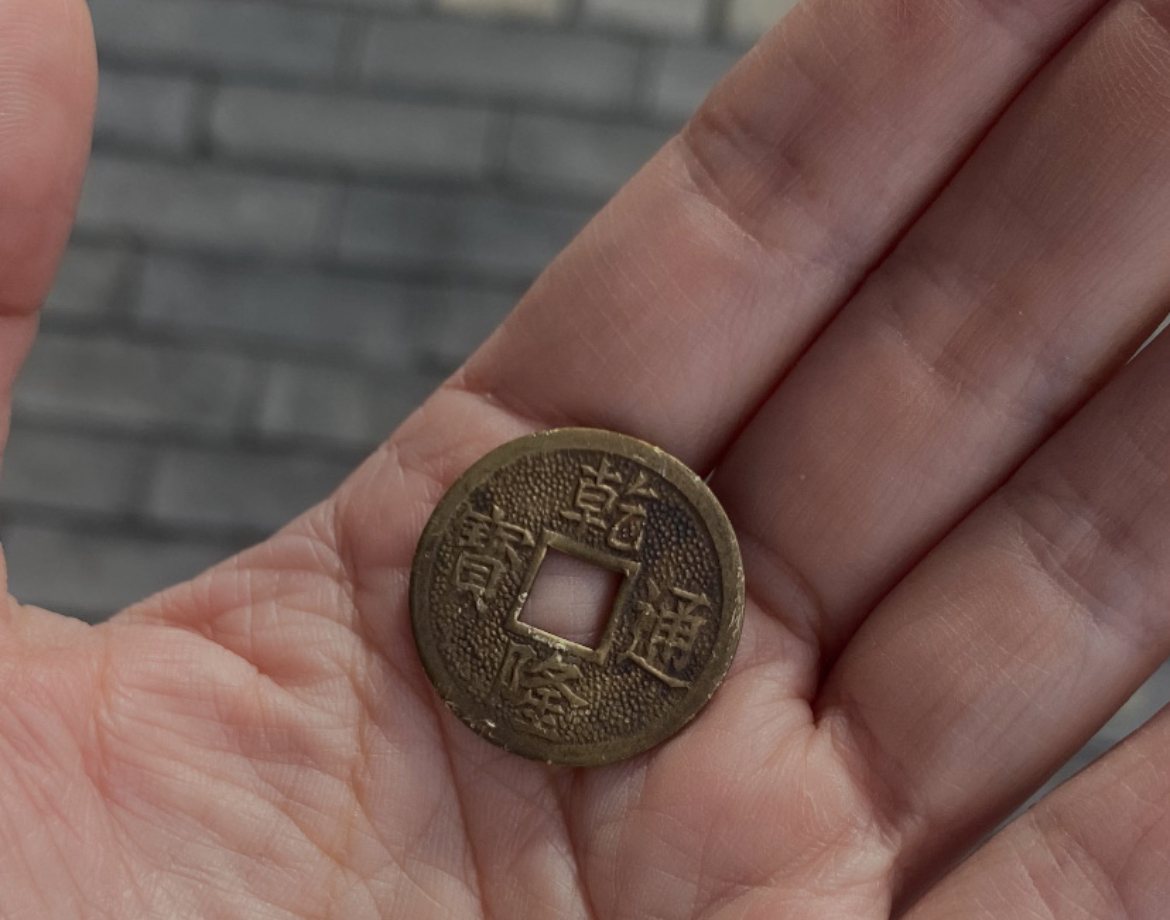
All you need is three coins and a question. Hold the question in mind and throw the coins six times. Each throw gives you one line, and you build the hexagram from the bottom up.
- Ask one clear question. Open questions work best: “What do I need to understand about this?” gives more than “Will it work?”
- Throw the three coins. Count heads as 3 and tails as 2, and add them up. You will get 6, 7, 8 or 9.
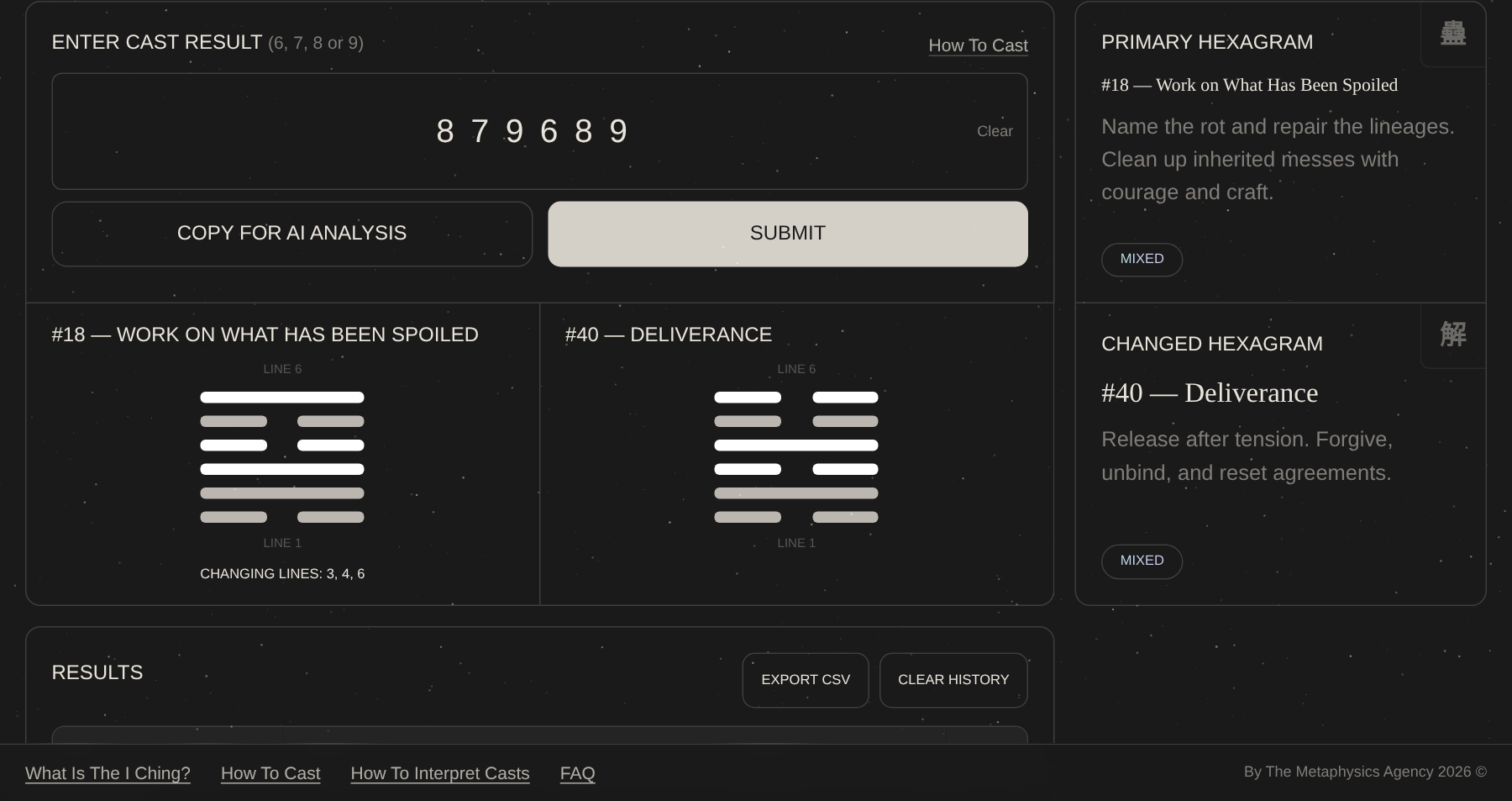
- Draw the line. 7 is a solid line (yang). 8 is a broken line (yin). 9 is a solid line that is changing. 6 is a broken line that is changing.
- Repeat five more times. Draw each new line above the last. Your first throw is the bottom line.
- Find your hexagram. Your six lines make one of the 64 hexagrams. Any changing lines flip to their opposite and give a second hexagram: where the situation is heading.
How the text is used. Each hexagram has a judgement that describes the whole situation, an image, and a short text for each of its six lines. Read the judgement first, then the texts for your changing lines, then the second hexagram. Treat it as a description of the moment you are in, and look for where it fits your situation.
In this practice, each question is cast once, by hand, and treated as a clean reading: nothing carries over from earlier casts, and nothing is re-cast for a better answer. Readings work from the classical Zhouyi in the Wilhelm-Baynes translation, and read the pattern through the body as well as the mind.
→For detailed instructions, see How to Cast in the Hexagram Lookup